FIFA World Cup 2026 in USA, Canada & Mexico: How to Stay Connected at Every Match
Across three countries, sixteen host cities, a single prize awaits. Beginning June 11 and concluding July 19 in 2026, the FIFA World Cup unfolds simultaneously within the United States, Canada and Mexico - never done before. Forty-eight national sides take part. One hundred and four matches. Spectators arrive from distant regions worldwide. Holding admission means access; having open weeks that summer opens possibility.
Yet here lies the issue. Moving across three nations involves separate cellular systems, multiple roaming charges, and the chance of disconnection inside unfamiliar streets. Prior to departure, handle internet access carefully. Selecting the best eSIM for international travel brings expense below that of a single arena beverage - while preventing a week's worth of frustration.
Best eSIM for USA, Canada & Mexico
The World Cup 2026 spans three nations. Pick the best eSIM for USA travel, Canada and Mexico separately - or one Vodafone Global eSIM that covers all three on a single profile.
USA eSIM plans Canada eSIM plans Mexico eSIM plans Check eSIM compatibilityQuick checklist
- Confirm your phone supports eSIM
- Make sure your device is unlocked
- Buy USA + Canada + Mexico eSIMs before travel
- Or pick one Vodafone Global eSIM for all three
- Label each eSIM profile clearly
- Enable data roaming on arrival
- Pack a power bank for match days
FIFA World Cup 2026: the biggest football tournament ever played
History resets with the 2026 World Cup. Expansion arrives - rising from 32 squads to 48 participants. Shared hosting emerges through three countries acting together. Geography stretches far - linking coastal British Columbia to central Mexico's heat. Urban anchors form at Toronto and Mexico City. Distance spans close to four thousand kilometers between outer points. A new shape takes place across the continent.
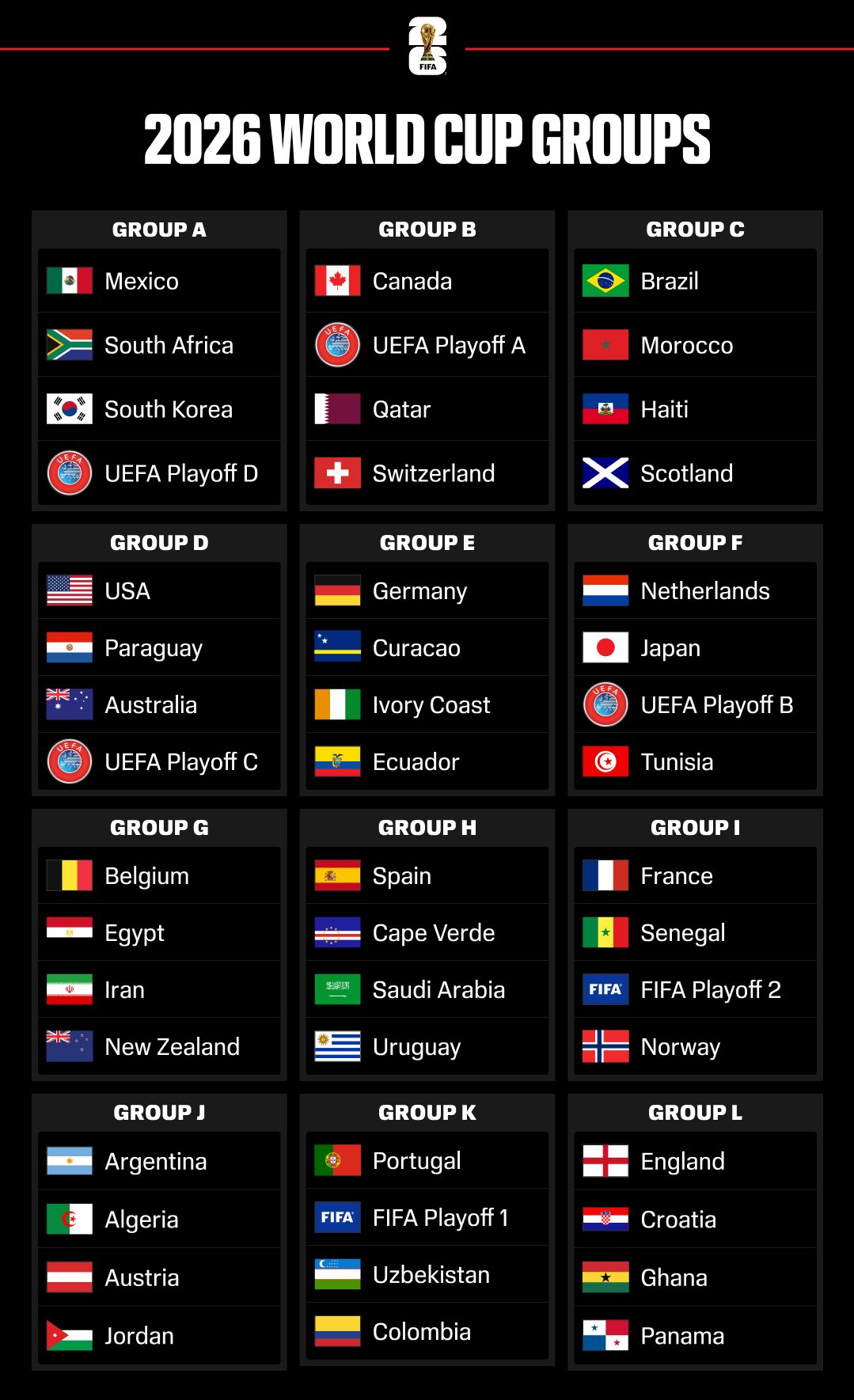
A total of one hundred and four games will take place. Across sixteen different cities, spread through three distinct time zones. Starting on Thursday, June 11 in Mexico City with the first match. Ending later in New Jersey on Sunday, July 19 when the last game is played. Group structure shifts - twelve sets of four squads now form the base instead of eight. Two from every group move forward without exception. Alongside them go the top-ranked third-place sides, a count of eight advancing further. Thirty-two clubs progress into an initial knockout phase unseen before this edition. Beyond that point, elimination rounds proceed by stages - through sixteens, quarters, semis, then the placement contest that follows at the end. The championship concludes only after these steps are fully completed.
Over five million attendees are expected at stadiums during the tournament, while vast numbers will gather in public spaces, accommodation areas, city centers, and travel hubs throughout the hosting locations. Television viewership could surpass five billion people when combined globally. Measured against any standard, the 2026 event appears set to become the largest sports gathering ever recorded on Earth.
Key dates and tournament schedule
Here is the schedule worth saving to your phone before a single flight gets booked:
| Stage | Dates | Where |
|---|---|---|
| Opening match | June 11, 2026 | Estadio Azteca, Mexico City |
| Group stage | June 11 – June 27 | All 16 venues |
| Round of 32 | June 28 – July 3 | USA, Canada, Mexico |
| Round of 16 | July 4 – July 7 | USA only |
| Quarterfinals | July 9 – July 11 | USA only |
| Semifinals | July 14 – July 15 | Atlanta & Dallas |
| Third-place playoff | July 18, 2026 | Miami |
| Final | July 19, 2026 | MetLife Stadium, New York/New Jersey |
Beginning at the quarterfinals, each game occurs within the United States. Should your journey start in Toronto or Guadalajara during the early rounds, later stages gradually shift focus toward American venues. Adjust travel expectations with that progression. Data planning follows this geographic pivot naturally.
The 16 host cities and stadiums
Across sixteen venues, games are spread unevenly. Most fall on American soil - seventy-eight of one hundred four matches land there, covering every knockout fixture starting at the quarters up to the championship match. Elsewhere, Canada and Mexico split what remains - twenty-six early-round contests handled during the group stage and the first elimination phase. Locations follow this arrangement:
United States – 11 cities, 78 matches
| City | Stadium | Capacity | Notable role |
|---|---|---|---|
| Atlanta, GA | Mercedes-Benz Stadium | 71,000 | Semifinal host |
| Boston, MA | Gillette Stadium (Foxborough) | 65,000 | Group + knockout |
| Dallas, TX | AT&T Stadium (Arlington) | 80,000 | Semifinal host |
| Houston, TX | NRG Stadium | 72,000 | Group + knockout |
| Kansas City, MO | Arrowhead Stadium | 76,000 | Group + knockout |
| Los Angeles, CA | SoFi Stadium (Inglewood) | 70,000 | Quarterfinal host |
| Miami, FL | Hard Rock Stadium | 65,000 | Third-place playoff |
| New York/NJ | MetLife Stadium | 82,500 | Final, July 19 |
| Philadelphia, PA | Lincoln Financial Field | 69,000 | Group + knockout |
| San Francisco Bay | Levi's Stadium (Santa Clara) | 68,000 | Group + knockout |
| Seattle, WA | Lumen Field | 69,000 | Group + knockout |
Mexico – 3 cities, 13 matches
| City | Stadium | Capacity | Notable role |
|---|---|---|---|
| Mexico City | Estadio Azteca | 87,000 | Opening match, June 11 |
| Guadalajara | Estadio Akron | 49,000 | Group stage matches |
| Monterrey | Estadio BBVA | 53,000 | Group stage matches |
Among global arenas, Estadio Azteca stands alone in having held three FIFA World Cup tournaments. In 1970, it saw Pelé lead Brazil to victory on its grass. Then came 1986, when Maradona guided Argentina through the same ground. Now, decades onward, it begins the 2026 chapter. Few places draw such deep reverence from football history.
Canada – 2 cities, 13 matches
| City | Stadium | Capacity | Notable role |
|---|---|---|---|
| Toronto, ON | BMO Field (expanded) | 45,000 | Group stage + Round of 32 |
| Vancouver, BC | BC Place | 54,000 | Group stage + Round of 32 |
One change seen at both sites in Canada involves fresh playing surfaces, broader guest facilities, alongside improved signal networks for devices. A long-awaited opening game unfolds in Toronto - this event marks a return after absence since failing qualification back in 1986, now drawing attention from countless residents across the nation.
Why one eSIM beats three local SIMs
Imagine arriving in Mexico City by air on June 11 for the first game. Four days later, attendance at the match in Guadalajara follows without delay. Three days beyond that, travel continues - to Dallas - for another fixture. Within seven days, movement spans across two national frontiers. Using traditional SIM cards means visiting a service counter each time. Each stop brings a new number to track. Reading through separate agreements becomes routine. Every switch requires opening the SIM slot, usually with a tiny tool misplaced beneath a car seat. The pattern repeats every few days.
Every task vanishes with a digital SIM for travel. Purchase access for the United States, Canada and Mexico prior to departure. Activate by scanning a code inside your living room. Upon arrival, enable the correct line - connectivity begins swiftly. Physical counters disappear. Waiting lines fade. Plastic cards stay unused as a rideshare idles outside Terminal 4.
One detail most travelers miss: the home phone number stays active the whole time. Telefy eSIMs run alongside the existing SIM, which means regular calls and SMS keep arriving without interruption. Data alone is handled by the eSIM. WhatsApp, FaceTime and iMessage all continue working under the home number - traffic simply routes through the eSIM's data connection.
Best eSIM for USA travel: Telefy's full lineup
Across the United States, Telefy USA eSIM service operates on both AT&T Mobility and Verizon Wireless - ranked as top carriers through consistent third-party testing. Within major venues like stadiums, airports, hotels and downtown zones, reliable 5G or 4G connectivity remains widely available. Each data package allows personal hotspot usage, enabling access across additional devices such as laptops or secondary phones.
Looking for the best eSIM for USA travel during the World Cup? Telefy USA presents the most varied selection - five prepaid options spanning from 1 GB to 20 GB - allowing alignment with both trip duration and personal data demands. The complete lineup appears below:
| Plan | Data | Validity | Price | Best for |
|---|---|---|---|---|
| Telefy USA eSIM | 1 GB | 7 days | €3.99 | Single-match weekend trip |
| Telefy USA eSIM | 3 GB | 30 days | €8.99 | Light user, two-week stay |
| Telefy USA eSIM | 5 GB | 30 days | €13.99 | Group stage tour - most popular |
| Telefy USA eSIM | 10 GB | 30 days | €22.99 | Heavy user, full tournament |
| Telefy USA eSIM | 20 GB | 30 days | €36.99 | Streaming, hotspot, remote work |
A typical fan attending three group-stage matches across two American cities burns through roughly 3 to 5 GB - directions, ride-shares, WhatsApp groups, ticket QR codes, score apps, social uploads, plus the occasional video call home. When streaming highlights, tethering a laptop, or chasing a team deep into the knockout rounds across multiple cities, the 10 GB plan hits the sweet spot. As for the 20 GB tier - that one belongs to media types, content creators, and anyone running a business from the road.
USA eSIM plans from €3.99
AT&T and Verizon networks. 5G and 4G supported. Mobile hotspot included at no extra charge.
See USA eSIM planseSIM Canada: Telefy's Canada eSIM plans
Across Canada, Telefy's Canada eSIM links to networks such as Bell Mobility, Rogers, Telus, SaskTel, alongside Videotron - covering all primary providers. In Toronto, 5G reaches completely through central districts, extending to locations like BMO Field. Moving outward, connectivity holds firm along routes leading to airports and ferry access points. Downtown Vancouver maintains consistent high-speed signal too, right around BC Place.
| Plan | Data | Validity | Price | Best for |
|---|---|---|---|---|
| Telefy Canada eSIM | 1 GB | 7 days | €5.29 | Single-match flying visit |
| Telefy Canada eSIM | 5 GB | 30 days | €17.99 | Multi-match Canadian leg |
A handful of supporters typically remain for just forty-eight to seventy-two hours, tracking a match or two across Canada - the 1 GB option supports such brief trips well. When stays stretch toward seven days, especially with live clips uploaded, devices linked and video played during transit, the 5 GB package proves more suitable. International providers often apply steep fees once users enter Canadian networks; these rates resemble those found near major venues. Avoiding that expense becomes possible through this service.
Canada eSIM plans from €5.29
Bell and Rogers among the available providers. Telus and Videotron join that list. Each now supports 5G capability.
See Canada eSIM plansBest eSIM for Mexico: Telefy Mexico plans
Connected via AT&T Mexico and Movistar (Pegaso PCS), Telefy Mexico eSIM rides the nation's most stable networks for international phones. In major urban zones like Mexico City, Guadalajara and Monterrey, 4G remains consistent while 5G holds steady near central hubs and event venues. Areas such as Coyoacán's old districts near Estadio Azteca link without interruption. The traditional core of Guadalajara maintains connectivity just as steadily as Monterrey's factory-lined edges.
| Plan | Data | Validity | Price | Best for |
|---|---|---|---|---|
| Telefy Mexico eSIM | 1 GB | 7 days | €5.99 | Quick weekend, single match |
| Telefy Mexico eSIM | 5 GB | 30 days | €22.99 | Full Mexican group stage |
Living in Mexico during the tournament costs less compared to other host locations - accommodations run below those in the United States, meals deliver rich flavors without high prices, while travel among major cities like Mexico City, Guadalajara and Monterrey remains simple through short internal flights. For visitors watching several matches over a week, a data package of 5 gigabytes proves sufficient.
Mexico eSIM plans from €5.99
Across Mexico, AT&T provides service alongside Movistar. Connectivity reaches through both 5G and older 4G systems.
See Mexico eSIM plansOne eSIM for the whole tournament: Vodafone Global
Across three host nations, tracking your team becomes easier without multiple subscriptions. Instead of buying distinct plans, consider a different path - the Vodafone Global eSIM offers one profile that covers those countries along with seventy-four others included by design. Simplicity emerges where complexity might otherwise take hold.
| Plan | Data | Coverage | Validity | Price |
|---|---|---|---|---|
| Vodafone Global eSIM | 25 GB | USA + Canada + Mexico + 74 more countries | 30 days | €39.99 |
A full month of use fits neatly within twenty-five gigabytes for most fans. While calling across the EU and toward the UK carries no limits, messages arriving cost nothing either. Included without extra steps: a working phone number based in the UK. Throughout every stop on the World Cup journey, just one eSIM remains active - no changes needed whether stepping over the Rio Grande or landing at Toronto-Pearson.
Travelers arriving from European hubs like London find coverage active upon landing. Reach extends across Argentina, Australia and Belgium, yet also includes distant regions such as Japan and New Zealand. Those passing through Buenos Aires en route from South American cities stay connected without changes. Even layovers in Tokyo maintain uninterrupted service under the same digital profile. A single setup supports movement between France, Germany and Ireland, plus locations like Jamaica and Switzerland. Portugal, Spain, the Netherlands, Turkey and the United Kingdom are part of this network too - alongside many others. Installation occurs once; usage continues globally. Pilgrimages involving multiple matches across continents rely on consistent access. The solution applies equally to short stopovers and extended routes.
Heading further? Telefy plans for nearby countries
Most supporters plan their World Cup journey alongside travel across Latin America or the Caribbean. True - how often does one reach such distant regions? Connectivity arrives through Telefy's eSIMs, available in each neighboring nation deemed worthwhile. Among the frequent choices, a few options stand out:
Caribbean detours
| Country | Why visit | eSIM page |
|---|---|---|
| Costa Rica | Rainforest, beaches, easy hop from Mexico or Miami | Costa Rica eSIM |
| Dominican Republic | Punta Cana resorts, short flight from Miami | Dominican Republic eSIM |
| Jamaica | Beach week, reggae, Bob Marley pilgrimage | Jamaica eSIM |
South American add-ons
| Country | Why visit | eSIM page |
|---|---|---|
| Brazil | Rio, Sao Paulo, Maracana stadium pilgrimage | Brazil eSIM |
| Argentina | Buenos Aires, Boca Juniors stadium, La Bombonera | Argentina eSIM |
| Colombia | Cartagena, Medellin, coffee region | Colombia eSIM |
| Chile | Santiago, Atacama desert, Patagonia | Chile eSIM |
| Peru | Machu Picchu, Lima, Sacred Valley | Peru eSIM |
| Uruguay | Montevideo, beach towns, original 1930 World Cup host | Uruguay eSIM |
Coming from Europe?
Starting abroad means thinking ahead about connectivity - especially when arriving from the EU or UK into cities such as Paris, Frankfurt, Madrid or London. One option stands out: the O2 European eSIM offering 35 GB of data throughout more than 40 nations along with unlimited calling, priced at €29.99. Instead of relying on local networks, travelers might combine this plan with an existing North American eSIM covering the United States, Canada and Mexico. With both active, connection remains consistent beginning at departure and ending only once back inside their own homes.
Mobile networks at every host country
Every nation manages its telecommunications independently; with a travel eSIM, access shifts automatically to the most reliable domestic signal upon arrival. Behind the scenes, this is how Telefy's embedded SIM establishes connection:
| Country | Networks used | 5G availability |
|---|---|---|
| USA | AT&T Mobility, Verizon Wireless | Widespread in all host cities |
| Canada | Bell Mobility, Rogers, Telus, SaskTel, Videotron | Strong in Toronto and Vancouver downtowns |
| Mexico | AT&T Mexico, Movistar (Pegaso PCS) | Available in Mexico City, Guadalajara, Monterrey |
Despite being temporary, 5G setups inside match venues reflect deep investment by FIFA and local organizers. Leading connectivity performance is already seen at Mercedes-Benz Stadium in Atlanta. SoFi Stadium near Los Angeles matches that level without relying on permanent installations. Signal capacity at AT&T Stadium in Dallas improved significantly just before kickoff. Within Mexico City, even the historic Estadio Azteca now hosts modern small cell units built into the seating bowl.
How much data will you actually use?
Early morning light fills the room. A glance at the device confirms the game time. News passes by, momentary and quiet. Coffee is requested online without conversation. The route to the venue appears after a quick search. Transportation choices are reviewed one after another. Should a ride be needed, a rideshare service reaches the destination with continuous location tracking active. Upon arrival, entry occurs through presentation of an electronic pass. Image files transmit afterward to relatives in distant locations. Social updates appear simultaneously along public viewing corridors. Brief clips from prior contests play during pauses in current events. Scoreboards update in real time without prompting. Conversations unfold remotely with absent acquaintances via live visual links.
One match day usually uses around 500 MB up to 1 GB, influenced by video streaming volume. When considering total travel duration, factor in each event date along with extra allowance for downtime between games - that sum forms the baseline estimate. Visitors arriving just for group matches generally require roughly 5 to 10 GB. Those following every phase across multiple nations often exceed 15 GB - a demand met directly by the design of Vodafone's 25 GB international package.
Travel logistics: moving between three countries
Travel across borders may seem intense, yet the process tends to be simple. Flights from the United States to Canada or Mexico feel more like internal trips than global journeys. Between each major city combination, services operate several times daily. Five and a half hours covers the trip from Toronto straight to Mexico City. From there, reaching Dallas takes roughly two and a half. Los Angeles follows Vancouver at around three. Tighter spacing across the region surprises most observers - distance within the group runs shorter than assumed by many.
When it comes to money, each country uses its own: the United States has the dollar, Canada the loonie, Mexico the peso. Though digital payments work just about anywhere - phones, watches, cards that tap through - small stands might only take paper bills. Transit kiosks, fast food spots, ballparks tend to prefer electronic methods. Cards like Visa and Mastercard go almost everywhere across borders. American Express? Accepted sometimes south of the border, though not always reliably. Tips at cafes or markets may require folding cash after all.
Visas: US ESTA applies for most European visitors, eTA for Canada, FMM for Mexico - handed out on arrival. Sort all three weeks ahead of departure. Last-minute approvals get tight during summer travel season.
Time zones: Central time covers Mexico City. Meanwhile, Toronto along with much of the eastern United States observes Eastern. On the west coast, Vancouver, Los Angeles and San Francisco operate within Pacific. After your eSIM links to a nearby signal, the device adjusts its clock without further steps required - this happens as you move toward an event start.
Stadium-day tips for staying connected
Exactly when eighty thousand attendees fill one space, eager to share identical moments of triumph simultaneously, infrastructure falters under pressure. Those capturing memories without delay follow subtle patterns - others face endless waits. Timing matters more than device strength. Signals collapse where demand spikes most. Patience does not fix congestion; preparation does. Efficiency emerges from foresight, rarely from luck.
Download offline maps before leaving the hotel. Before departure, store digital maps of the surroundings. The vicinity of the stadium should be included. So too must the path leading outward from your accommodation. Where events follow the game matters just as much. Google Maps supports storage of these locations without internet access.
Save your tickets to the phone wallet. Apple Wallet, Google Wallet, or plain screenshots in the photo gallery. Opening an email at the gate is unreliable - networks slow down right at peak entry times.
Turn off background app refresh on the way to the venue. When heading to the venue, disable background app refresh. This reduces both battery usage and data flow. After the event ends, reactivation remains an option.
Wait five minutes after big moments before posting. Five minutes of waiting follows major events before any post should appear. As crowds send identical clips all at once, nearby towers reach capacity. After three hundred seconds pass, uploads move without delay, though others still watch progress bars crawl. Patience arrives just when networks clear.
Pack a power bank. A charged power bank becomes essential when match days stretch unexpectedly. Extended play, penalties and fanfare push events past their limit. Leaving early is rare, with crowds lingering well into the night. Transportation delays often follow. A drained device at that point brings immediate frustration. Two remaining hours feel endless without connectivity.
Disable Wi-Fi auto-connect. Occasionally, phones try to join unstable open networks without being told. These connections fail silently yet consume energy regardless. Instead of relying on such links, cellular service operates more reliably within crowded areas. When near large gatherings, permit only data plans to handle transmissions. Each unsuccessful grab for internet weakens power reserves further. Better results come through ignoring automatic network selection entirely.
Telefy vs other eSIM providers
The travel eSIM space has a handful of well-known providers. Here is how Telefy stacks up against the popular alternatives across the three host countries, comparing 5 GB / 30-day plans:
| Provider | USA 5 GB | Canada 5 GB | Mexico 5 GB |
|---|---|---|---|
| Telefy | €13.99 | €17.99 | €22.99 |
| Airalo | ~€15 | ~€19 | ~€24 |
| Saily | ~€16 | ~€20 | ~€25 |
| Holafly (5-day unlimited) | ~€27 | ~€29 | ~€31 |
Despite initial appearances, Holafly's so-called unlimited options last merely five to seven days. With Telefy, costs remain lowest regardless of destination country. As multi-region coverage is included, the difference grows larger. Shorter time limits appear alongside undisclosed data thresholds that reduce speeds gradually. When extending usage toward a full month - such as during major events like the World Cup - the pricing advantage shifts clearly. Value tilts steadily toward Telefy under extended use. Hidden restrictions shape real-world performance more than advertised terms suggest.
Frequently asked questions
What is the best eSIM for USA travel during the World Cup?
Telefy's USA eSIM presents the strongest choice for most visitors. Five prepaid tiers cover every trip length, from a single match weekend up to a full tournament stay. Networks route through AT&T Mobility and Verizon Wireless - the country's strongest carriers. Hotspot sharing comes included on every plan. For travelers covering all three host nations with one profile, Vodafone's Global eSIM at 25 GB for thirty days at €39.99 remains the simplest single-purchase route.
Which is the best eSIM for Mexico when following matches at Estadio Azteca?
For Mexican venues, Telefy's Mexico eSIM links through AT&T Mexico and Movistar - the networks holding firm inside Mexico City, Guadalajara and Monterrey. A 1 GB plan covers a single-match weekend. The 5 GB option stretches across a full week of matches, Coyoacán wandering and rideshare hopping. Both sit below what Airalo or Saily charge for the same capacity.
Is it possible to apply a single eSIM throughout each of the three destination nations?
Indeed. Across the United States, Canada and Mexico, one profile suffices - Vodafone's Global eSIM offers 25 gigabytes for thirty days at a cost of €39.99. Seventy-four additional nations are included within this plan. Physical SIM changes become unnecessary due to embedded technology.
Will my home phone number still work?
Indeed. While the Telefy eSIM handles internet access, the original SIM continues managing voice calls, text messages, and keeps the home number unchanged. Data runs separately through the digital profile instead of taking over entirely.
Installation of the eSIM - must it happen prior to departure or once arrival occurs?
Installation ahead of travel is the recommended route. Activation triggers automatically once the phone joins a local network upon landing. Purchasing early does not burn validity days; the clock only begins when the line is actually used.
Inside the stadium, does the eSIM function properly?
Indeed. Every stadium hosting FIFA events receives enhanced mobile connectivity by 2026. Instead of relying on local networks alone, Telefy operates through top-tier providers - such as AT&T and Verizon across the United States, Bell plus Rogers within Canada, along with AT&T Mexico in its respective region. When crowds reach around eighty thousand people using data simultaneously, signal strain becomes noticeable; this challenge impacts all services without exception.
Is it possible to share internet through a mobile hotspot?
Indeed. All Telefy packages come with unrestricted hotspot access, meaning one may connect a companion's device, a computer, or multiple gadgets at once. Connection sharing applies across every available option.
What devices support Telefy eSIM?
Devices such as the iPhone XS and later models are supported. Starting from the Samsung Galaxy S20+, newer versions work as well. Google Pixel phones beginning with the third generation qualify. Many units within the Xiaomi 13 lineup also meet requirements. The device must not be tied to a specific network provider. Compatibility information can be found here.
What if my plan runs out mid-tournament?
A purchase completes within moments using the identical Telefy profile. Alongside the current option, the updated package activates automatically. Service continues without pause.
Get a Telefy eSIM
Starting with compatibility, Telefy eSIMs function across iPhone XS models and those released afterward. Support extends to Samsung Galaxy S20+ units and later versions. Google Pixel 3 devices along with anything more recent are included. Certain gadgets within the Xiaomi 13 line appear on the list too. One condition stands firm - carrier unlocking is required for operation.
Pick your World Cup eSIM
A single Vodafone Global eSIM offers access across the United States, Canada and Mexico. Alternatively, individual plans are available for each country.
Scan the QR code
Once sent by email, the QR appears directly on screen. Scanning triggers automatic setup - within seconds, the eSIM activates without extra software.
One-click.
Land and connect
Upon arrival in Mexico, the United States or Canada, activate data roaming for the eSIM profile. Connectivity typically establishes itself shortly after.
Get USA eSIMFrom June 11 to July 19, 2026 - matches unfold across three countries, spread over sixteen urban centers and three distinct time zones. Connectivity follows without pause when a Telefy eSIM is already active at arrival. Rather than depend on local networks, secure access before departure. Once set, data needs remain met throughout the season.
Ready for the FIFA World Cup 2026?
Get your eSIM sorted before kick-off. Pick by host country or grab one Vodafone Global eSIM for all three.
USA eSIM Canada eSIM Mexico eSIM


